XArc / Astroport Announce $1.3 Million in Multiple NASA SBIR/STTR Awards for 2023

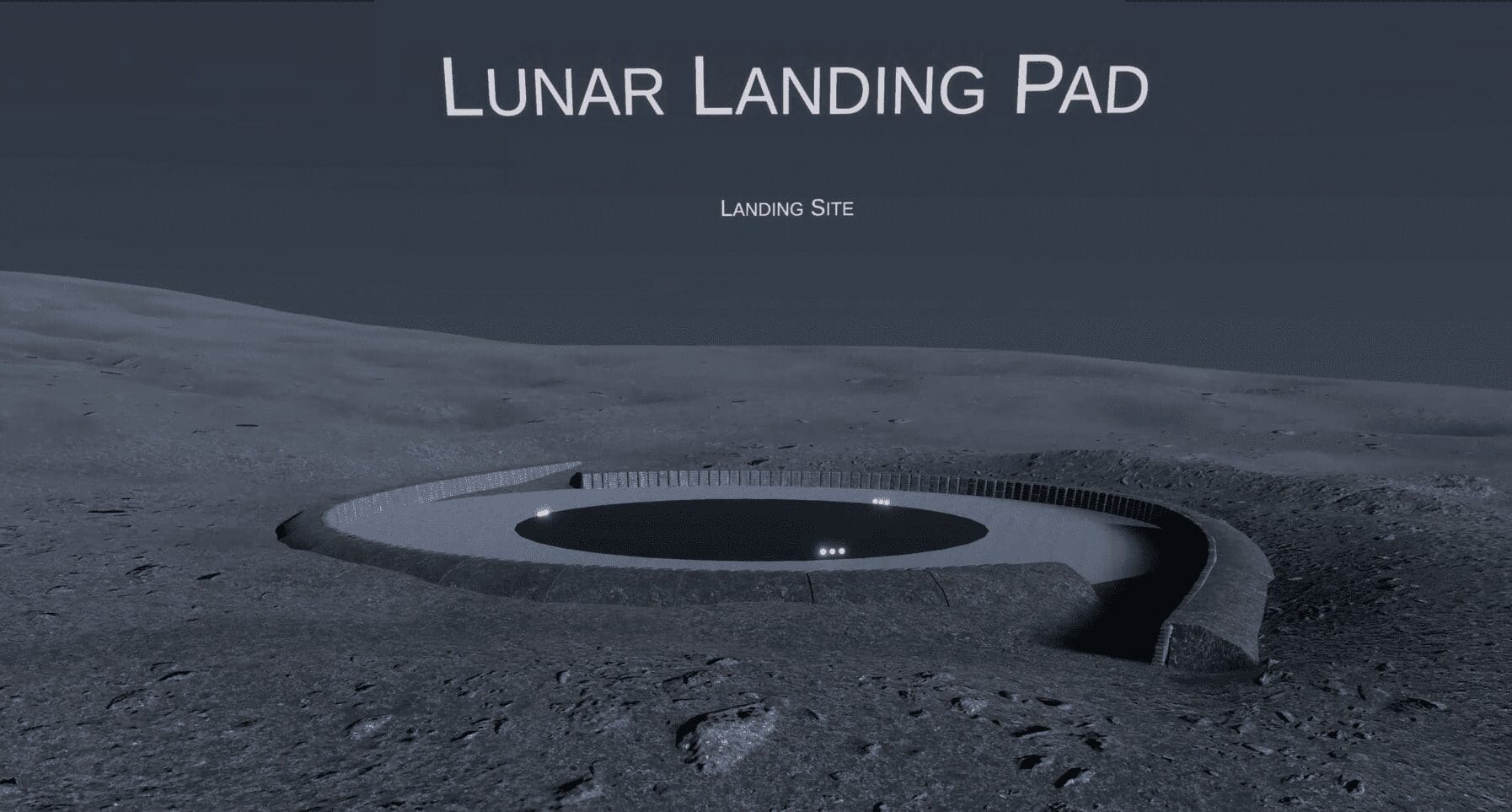
SAN ANTONIONov. 27, 2023 /PRNewswire/ — Astroport Space Technologies and its parent organization Exploration Architecture Corporation (XArc) received a combined $1.3M in NASA SBIR/STTR awards for development of extreme environment landing pad technologies. The SBIR/STTR Phase 1 and Phase 2 awards will focus on development of lunar construction and operations technologies needed for lunar surface landing/launch pads (LLPs) in support of the NASA Artemis program.

NASA awarded Astroport a Phase 1 SBIR to advance development of its unique Lunatron® furnace-nozzle for making bricks from molten lunar regolith (lunar soil). Bricks are used for the surface pavement in Astroport’s LLP design. A Phase 1 STTR was awarded to Astroport for development of novel regolith flow technology for mitigating problematic electro-static forces during conveyance of processed regolith. This sieving and grain separation technology will isolate the regolith grains that are ideal for manufacturing lunar bricks. Additionally, NASA awarded Astroport’s parent company, XArc, a Phase 1 STTR contract for development of an autonomous pathfinder surveying robot (Surveyorbot) to determine geotechnical characteristics of a potential landing site. The Surveyorbot will perform precursor surveying missions prior to deployment of surface construction operations, to characterize regolith handling difficulty at a selected site, such as load bearing capability, compaction and penetration depth, as well as soil settlement due to imposed loads from heavy cargo landers. Total value of these awards is $450,000.

NASA also selected Astroport and its consortium team comprised of industry partners and academic research institutions, for a Phase 2 STTR award valued at $850,000 to refine the team’s Phase 1 defined concept of operations (CONOPS) and system architecture for the LLP site preparation and construction process.

4/16/2026

Corporation have teamed up to develop autonomous heavy construction machinery built specifically for the Moon. Announced at the ASCE Earth & Space 2026 conference, the partnership combines Vermeer’s decades of experience in high-torque industrial equipment with Astroport’s robotics and lunar regolith expertise. The goal is to create machines capable of performing essential groundwork like excavating, preparing landing zones and building protective structures, all while dealing with the Moon’s brutal conditions: extreme temperature swings, radiation, no atmosphere, and gravity just one-sixth of Earth’s.

The collaboration is part of a much bigger picture. With NASA’s Artemis programme targeting sustained lunar operations by 2030, reliable construction infrastructure is no longer a “nice to have” but a hard requirement. Autonomous systems are central to this, since human presence on the Moon will be limited early on and communication delays make real-time remote control tricky. Beyond government programmes, the project signals growing commercial interest in a cislunar economy, where private companies like Astroport and Vermeer are positioning themselves as foundational players in what could become an entirely new frontier for the construction industry.

More Astroport News

Building the Moon From the Ground Up with Autonomous Machines

Astroport Space Technologies and Vermeer Corporation have teamed up to develop autonomous heavy construction machinery built specifically for the Moon. Announced at the ASCE Earth & Space 2026 conference, the partnership combines Vermeer’s decades of experience in high-torque industrial equipment with Astroport’s robotics and lunar regolith expertise. The goal is to create machines capable of performing essential groundwork like excavating, preparing landing zones and building protective structures, all while dealing with the Moon’s brutal conditions: extreme temperature swings, radiation, no atmosphere, and gravity just one-sixth of Earth’s.

The collaboration is part of a much bigger picture. With NASA’s Artemis programme targeting sustained lunar operations by 2030, reliable construction infrastructure is no longer a “nice to have” but a hard requirement. Autonomous systems are central to this, since human presence on the Moon will be limited early on and communication delays make real-time remote control tricky. Beyond government programmes, the project signals growing commercial interest in a cislunar economy, where private companies like Astroport and Vermeer are positioning themselves as foundational players in what could become an entirely new frontier for the construction industry.